


One bite into something hard. A knock you didn’t see coming. And suddenly your tongue is running across a sharp edge.
A chipped tooth tends to feel more dramatic than it looks, at least in the first few seconds. And the first question most people ask isn’t really a dental question at all.
It’s: what do I do right now?
This guide covers exactly that. What to do immediately, when it actually needs urgent attention, and what your repair options are, including what we see most often here at Smile London on Harley Street.
First Things First: Is It an Emergency?
Not every chipped tooth needs you to drop everything. But some do. Here’s how to tell the difference.
Go to an emergency dentist if:
- you’re in significant pain
- the tooth has broken in a way that’s left a sharp edge cutting into your tongue or cheek
- there’s bleeding that won’t stop
- you can see what looks like the inner layer of the tooth (it’ll appear more yellow, or even pinkish)
That last one matters. If the inner layer is visible, the nerve may be exposed, and that needs attention quickly. Not tomorrow.
Book a routine appointment if:
- the chip is small and there’s no pain
- you can see it cosmetically but it’s not causing any discomfort
In this case, it’s not urgent, but you should still have it looked at. Even a minor chip can worsen if the edge is uneven or the tooth’s structural integrity has been affected.
What to do right now, before you see a dentist:
Paracetamol or ibuprofen will help if there’s any pain. Rinse with warm, slightly salty water to keep the area clean, and avoid very hot or very cold food and drinks.
A chipped tooth is often more sensitive than you’d expect.
If the edge is sharp and catching on your tongue, dental wax (most pharmacies stock it) gives temporary relief.
And if the tooth has broken more significantly and you’ve found the piece, put it in a small container of milk and bring it with you. It’s unlikely to be reattachable, but your dentist will want to see it.
Why a Chipped Tooth Shouldn’t Be Ignored
This is the part people tend to underestimate.
A chip that looks purely cosmetic can create problems you can’t see. When enamel breaks, it leaves an uneven surface that’s more vulnerable to further damage. Bacteria find their way into cracks more easily. And if the chip is close to the gum line, or the inner tissue (the pulp) is at all involved, there’s a risk of infection if it’s left alone.
For front teeth, there’s the confidence side of it too. A chipped front tooth changes the way you smile, the way you feel in photos, the way you hold yourself in conversation. That’s not a small thing.
Chipped Tooth Repair Options
The right fix depends on the size of the chip, where the tooth is, and what condition the rest of the tooth is in. Here’s an honest overview.
Composite Bonding for Chipped Tooth Repair
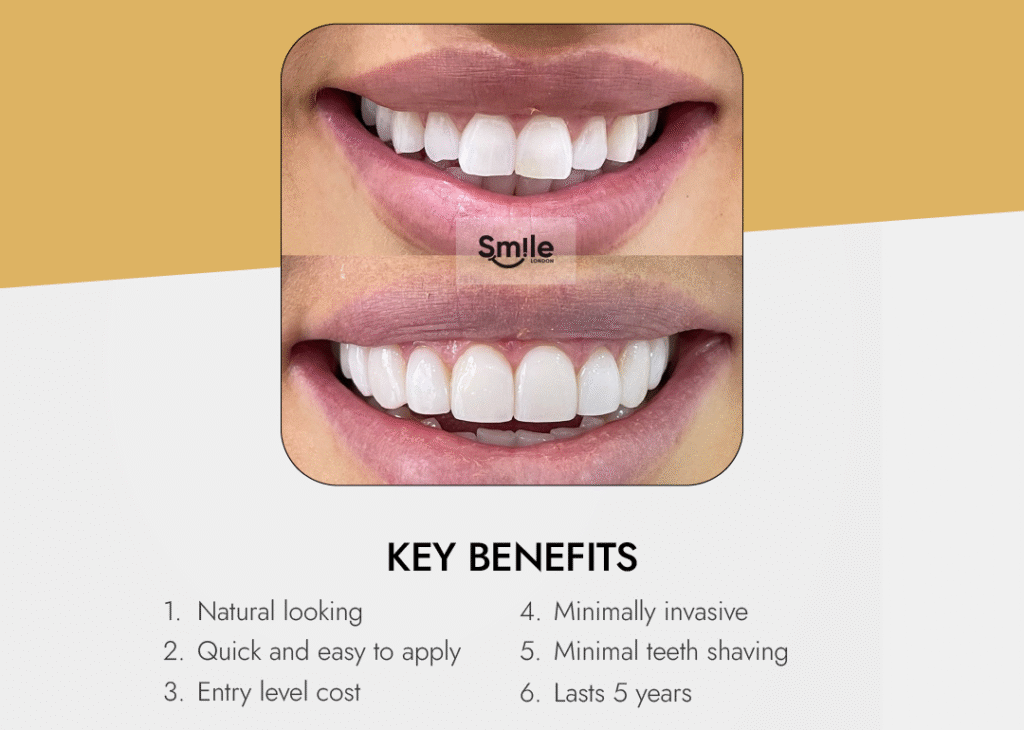
For many smaller chips, especially a chipped front tooth, composite bonding is usually the simplest and most natural-looking fix.
This is often the treatment people are hoping for, even if they don’t know the name for it yet.
Composite bonding uses a tooth-coloured resin to rebuild the chipped area and reshape the tooth so it blends naturally with the rest of your smile.
It’s one of the most common ways to treat a chipped tooth repair case because it’s:
- minimally invasive
- usually completed in one visit
- designed to match the natural tooth
- effective for edges, corners, and small visible chips
When done well, it should look like the chip was never there.
If the damage is small and cosmetic, this is often the most straightforward solution.
You can read more about composite bonding here, including when it’s the right option and what to expect.
Dental Veneers
If the chip is part of a wider set of cosmetic concerns, or if the tooth has been repaired and re-chipped more than once, a porcelain veneer may be the better long-term solution.
Veneers cover the entire front surface of the tooth and are significantly more durable than composite. They’re also a bigger commitment and a higher cost, so it’s not the first step for a straightforward chip.
Dental Crowns
If a larger part of the tooth has broken away, bonding may not be enough.
In those cases, the tooth may need a crown.
A crown covers and protects the remaining tooth structure, which is often the safer long-term option if the tooth has been weakened.
This is more common in:
- larger broken tooth cases
- back teeth under heavy bite pressure
- teeth with previous large fillings
- deeper fractures
Root Canal Treatment
If the nerve is exposed or infected, a root canal becomes necessary before any cosmetic repair. It’s carried out under local anaesthetic and is designed to remove the source of pain, not cause it.
Once it’s done, the tooth is usually restored with a crown.
Can a Chipped Front Tooth Be Fixed in One Visit?
Very often, yes.
This is one of the most common concerns, especially when the chip is visible.
For a chipped front tooth, same-day repair is often possible with composite bonding, provided the tooth is otherwise healthy and the damage is limited.
That means in many cases, the shape, edge, and appearance can be restored in a single appointment.
And because front teeth are so visible, the detail matters.
The shape has to feel natural. The colour has to sit properly. The finish has to blend.
That’s usually the difference between a repair that simply fixes the tooth, and one that actually disappears into the smile.
Can You Leave a Chipped Tooth Untreated?
Sometimes people do, especially if it doesn’t hurt.
But that doesn’t mean it’s a good idea.
Even a small chip can:
- become larger
- create a weak point
- catch the bite awkwardly
- expose deeper layers over time
And once that happens, the repair often becomes more involved.
So even if it feels minor, it’s worth getting checked early.
What to Expect at Your Appointment

If you’re coming in for composite bonding, which is the most likely outcome for a straightforward chip, the appointment is usually relaxed and straightforward.
Your dentist will examine the tooth, take an X-ray if there’s any concern about the root or surrounding bone, and assess how much of the tooth structure is intact.
From there, they’ll walk you through the repair options and give you a clear picture of what’s involved and what to expect.
If bonding is the right call, the process is relatively quick. The surface of the tooth is lightly prepared, the composite resin is applied in layers, shaped, and then hardened.
Your bite will be checked and adjusted until everything feels right. You’ll leave the same day with the tooth restored.
How to Avoid Chipping a Tooth Again
There’s often an element of bad luck involved. But some habits do increase the risk: biting nails, chewing pens, using your teeth to open packaging. These all apply repeated, off-angle pressure that teeth aren’t designed for.
If you grind at night, that’s worth addressing too. Bruxism puts significant stress on enamel and can chip composite repairs just as easily as natural teeth. A nightguard is a simple fix.
And if you play contact sports, a custom mouthguard is worth the investment. Far cheaper than restorative treatment.
Medical disclaimer: This article is for general information only and does not replace clinical advice. The right treatment for a chipped tooth depends on the extent of the damage and should always be assessed by a dentist.
Need to Fix a Chipped Tooth?
If you’ve chipped a tooth and want to know what can actually be done, the first step is simply having it looked at properly.
At Smile London, we’ll assess the damage, explain what’s happened, and talk you through the most sensible way to repair it, whether that’s simple composite bonding or something more protective.
No pressure. Just a clear answer and the right fix.
Call 020 4540 1566 or visit us at 106 Harley Street, Marylebone, London.