You’ve seen the videos.
A smiling influencer steps off a plane in Istanbul, spends a week in a gleaming clinic, and comes home with a dazzling set of perfectly uniform white teeth, all for a fraction of what a London dentist might quote.
The appeal isn’t hard to understand. And if you’ve ever felt self-conscious about your smile, it’s easy to see why thousands of people book those packages every year.
But “turkey teeth” has come to mean something far more complicated than a budget smile makeover. Behind the before-and-after photos, there’s a clinical reality worth understanding, and it’s one that can affect your teeth for the rest of your life.
This isn’t an attempt to scare you away from anything. It’s an honest look at what you’re actually agreeing to, what it costs on both sides, what can go wrong, and what the alternatives genuinely look like.
What Are Turkey Teeth?
“Turkey teeth” isn’t a clinical term. It’s social-media slang, one that’s firmly entered everyday conversation, referring to a very specific look: ultra-white, hyper-uniform teeth, usually crowns, placed across most or all visible teeth during a short trip abroad, most commonly to Istanbul.
The typical package involves flying out, having your teeth prepared and fitted with crowns over five to ten days, and returning home with a dramatically different smile. Prices are aggressively attractive. The results can be striking. And for some patients, the experience is genuinely positive.
For others, it marks the beginning of a much longer (and far more expensive) story.
What makes this trend clinically significant is what often happens to the natural teeth underneath. In many cases, healthy tooth structure is filed down substantially, sometimes to small pegs, so that crowns can be fitted over them. This isn’t always necessary.
For patients with otherwise healthy teeth, it’s frequently avoidable.
Turkey Teeth Cost: UK vs Abroad
It would be dishonest to pretend the price difference isn’t real. It is, and it’s significant.
What You’ll Typically Pay in Turkey
Full-mouth crown or veneer packages (covering twelve to twenty teeth) are commonly advertised between £4,000 and £8,000. All-on-4 implant-supported full-arch restorations often come in at £6,000 to £12,000 per arch. Some packages include accommodation, which adds to the appeal considerably.
The lower cost reflects lower labour costs, high-volume clinical models, and aggressive international marketing, not necessarily inferior materials, though quality does vary considerably between clinics.
What Equivalent Treatment Costs in London
Private cosmetic dentistry in central London, particularly in Marylebone and Harley Street, operates at a different price point entirely:
- Single porcelain veneer: £800–£1,500 per tooth
- Single metal-free crown: £900–£1,800 per tooth
- Full-mouth veneer or crown case (12–20 teeth): £15,000–£40,000+
- All-on-4 / full-arch implant restoration: £18,000–£35,000 per arch
The gap is real. A full-mouth case that costs £6,000 in Istanbul might cost five or six times that amount in Marylebone. For many patients, especially those managing the cost of living in London, that difference feels impossible to ignore.
But cost comparisons only tell part of the story.
Turkey Teeth Gone Wrong: The Risks Worth Understanding
Search “turkey teeth gone wrong” and you’ll find no shortage of cautionary accounts: crowns that don’t fit properly, teeth that become painfully sensitive, gum tissue receding, bite problems causing months of jaw pain and headaches.
These aren’t fringe cases.
UK dentists, including practices on Harley Street, regularly see patients returning from dental tourism trips needing corrective work that costs considerably more than the original treatment.
Over-Preparation of Healthy Teeth
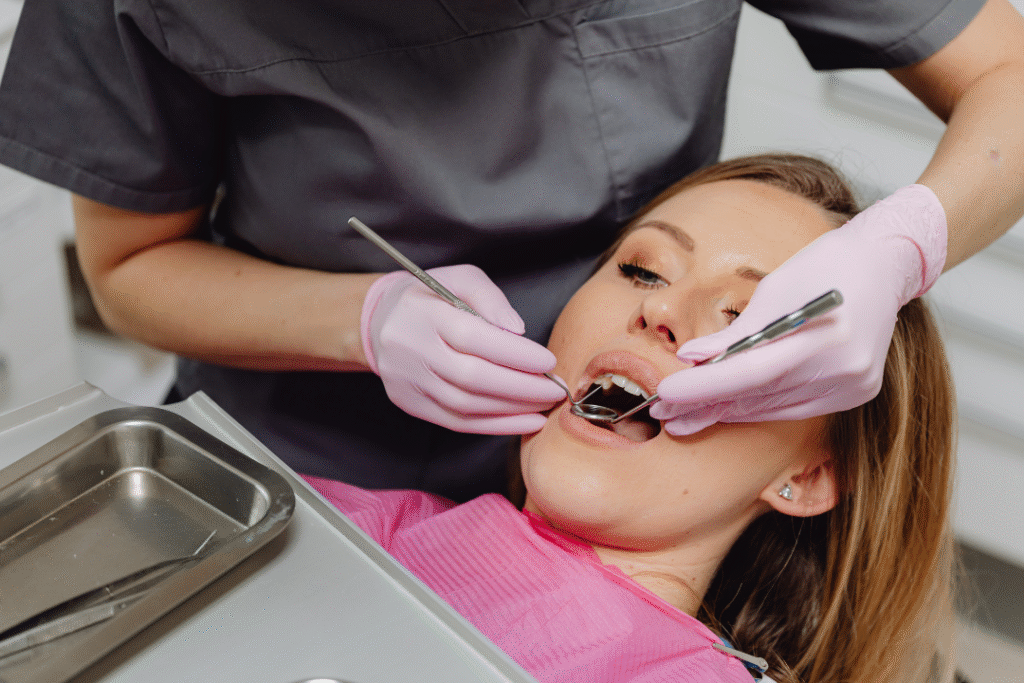
This is the central concern.
When teeth that could have been treated with minimal-prep veneers, or left completely alone after whitening and orthodontics, are instead filed down to small stumps to accommodate crowns, that tooth structure is gone permanently.
There’s no reversing it. The teeth become dependent on those crowns for the rest of the patient’s life, and if the crowns fail or need replacing, the options narrow considerably over time.
Aesthetic Issues
Teeth that are too white, too opaque, too square, or disproportionate to the patient’s face. The “piano key” look that’s become visually synonymous with the term.
This tends to happen when the planning process is compressed into a short window. There simply isn’t enough time to get the aesthetics right for an individual face.
Bite and Functional Problems
Crowns that don’t align properly with the opposing teeth can cause jaw discomfort, headaches, difficulty chewing, and accelerated wear on other teeth.
This is a particularly difficult problem to correct, because it often requires the crowns to be replaced entirely. A significant cost and another round of treatment.
Gum Complications
Poorly fitting crown margins create spaces where bacteria accumulate, leading to gum inflammation, recession, and, in implant cases, peri-implantitis, which is a serious infection around the implant itself.
Left untreated, peri-implantitis can lead to implant failure and significant bone loss.
No Aftercare Continuity
Patients return to the UK with no local dentist involved in their treatment, limited documentation, and often no clear plan for what happens when something goes wrong.
Warranty claims on work done abroad are notoriously difficult to pursue. And most UK practices are understandably cautious about taking on maintenance of work they can’t fully verify: the materials used, the planning approach, the margins of preparation.
Dental Tourism Risks Beyond the Chair
Beyond the clinical risks, there are practical realities that get overlooked when you’re looking at a polished package online:
- Legal recourse for negligent treatment abroad is extremely limited for UK patients
- Language barriers can affect genuine informed consent: do you fully understand what’s being done to your teeth?
- Regulatory standards differ significantly from the UK’s CQC framework
- Emergency care after you return falls to UK dentists who weren’t involved in your treatment and may have limited information about what was done
Turkey Teeth Implants: A Separate Conversation
Some packages marketed under the turkey teeth umbrella include implant-supported full-arch restorations; treatments like All-on-4, which replace an entire arch of teeth with implants and a fixed bridge.
These procedures can be genuinely life-changing for the right patient. Someone who has lost most of their teeth, or whose remaining teeth are beyond saving, may be an excellent candidate for implant-supported rehabilitation.
The clinical indication is real, and we wouldn’t dismiss these treatments.
The concern arises when implants are pursued primarily for cosmetic reasons, without the detailed diagnostics these procedures require. Proper implant planning involves CBCT scanning to assess bone volume and density, thorough gum health evaluation, and a clear long-term maintenance protocol.
When that foundation is missing, or rushed into a ten-day window, the risk of implant failure, infection, and bone loss increases substantially.
Implants aren’t a shortcut. They’re a long-term commitment that requires ongoing care, and that care needs to happen locally, with a dentist who knows your case.
Better Alternatives Available Right Here in London
Here’s what many patients don’t realise: the smile they’re flying to Istanbul for is often achievable (more safely, more conservatively, and with far better long-term outcomes) without leaving London.
Minimal-Prep and No-Prep Veneers
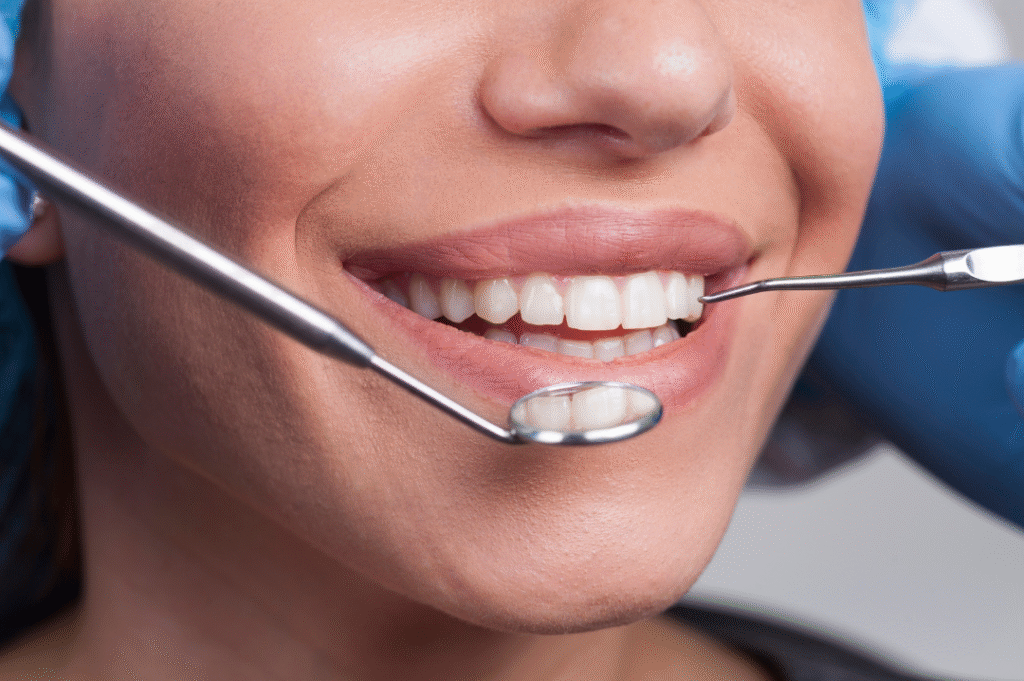
For patients with healthy teeth who want to address colour, minor shape irregularities, or small gaps, minimal-prep veneers are frequently the most appropriate solution. These remove as little as 0.3–0.7mm of enamel, preserving the vast majority of your natural tooth structure while delivering a genuinely beautiful result.
Our e.max veneers use lithium disilicate ceramic: a material that combines exceptional strength with the kind of translucency that mimics natural enamel beautifully.
The result is a smile that looks like yours, only better. Not a uniform row of porcelain tiles. Not that immediately recognisable “done” look. Something that suits your face.
It’s also worth noting that porcelain veneers placed on healthy, minimally prepared teeth can last fifteen to twenty years with proper care, often longer. That’s a very different long-term picture from crowns placed on heavily prepared, otherwise healthy teeth.
Orthodontics Combined with Whitening
For many patients, the real issue isn’t the shape or colour of their teeth. It’s the alignment.
Straightening teeth with Invisalign or clear aligners, followed by professional whitening, can produce a transformation that rivals any crown-based makeover, without touching the tooth structure at all. No irreversible changes. No dependency on restorations for life.
Invisalign in London typically costs £3,000–£7,000 depending on complexity. Combined with professional whitening, it’s often a more conservative and longer-lasting solution than a full-mouth crown case.
Crowns When They’re Clinically Warranted
Crowns aren’t inherently wrong. For heavily filled teeth, broken teeth, or teeth that have had root canal treatment, a well-made crown is often exactly the right clinical choice. Modern materials (zirconia and lithium disilicate) offer excellent strength and aesthetics. The key word is warranted.
Crowns placed on otherwise healthy, structurally sound teeth purely for cosmetic reasons represent unnecessary intervention, with consequences that compound over decades.
Composite Bonding
For patients with minor chips, small gaps, or slight discolouration, composite bonding can be an excellent entry point.A conservative, reversible treatment that produces meaningful results without removing any tooth structure at all.
It’s not right for every case, but when it is appropriate, it avoids the commitment of veneers entirely.
Digital Smile Design: Planning Before Anything Is Touched
One of the most significant differences between rushed dental tourism packages and the approach taken by experienced London cosmetic dentists is planning.
Digital Smile Design allows us to map out the aesthetic outcome in three dimensions before a single tooth is prepared. You see your result before treatment begins. Adjustments are made digitally, not on your teeth.
Combined with intraoral scanning, CAD/CAM precision, and an understanding of how your bite, jaw, and facial proportions all interact, this is what separates a smile that lasts from one that causes problems eighteen months later, and many thousands of pounds to correct.
What to Do If Your Turkey Teeth Have Gone Wrong
If you’ve returned from treatment abroad and something doesn’t feel right (sensitivity, bite issues, gum problems, or simply an aesthetic result you’re unhappy with) the most important thing is to get a thorough assessment as soon as possible.
The earlier problems are identified, the more options you have.
Corrective treatment varies enormously depending on what’s happened. It might involve replacing crowns, root canal treatment on over-prepared teeth, gum therapy, or, in implant cases, treating peri-implantitis before it causes irreversible bone loss.
Avoid the temptation to return to the original clinic abroad for corrections.
Having a UK-based practice that understands your full clinical picture gives you continuity, proper records, and someone to call if something changes.
Medical Disclaimer: The information in this article is intended for general educational purposes only and does not constitute clinical advice. Every patient’s dental health is individual, and treatment recommendations should always be based on a thorough in-person examination by a qualified dental professional. If you are experiencing dental pain, sensitivity, or concerns about existing dental work, please seek professional advice promptly. Smile London is a CQC-registered practice at 106 Harley Street, Marylebone.
Ready for an Honest Conversation About Your Smile?
If you’re thinking about a smile makeover, whether you’ve been researching options abroad or you’re simply not sure where to start, the most valuable thing you can do is speak to someone who’ll tell you what you actually need, not what’s easiest to sell.
At Smile London, we take a conservative, patient-centred approach to cosmetic dentistry. We’ll assess your teeth thoroughly, show you what’s genuinely possible, and be honest with you about what’s necessary, and what isn’t.
Some patients leave that first consultation realising they need far less than they thought.
We’re at 106 Harley Street, Marylebone. You can reach our team on 020 4540 1566.
Your smile is worth getting right the first time.